



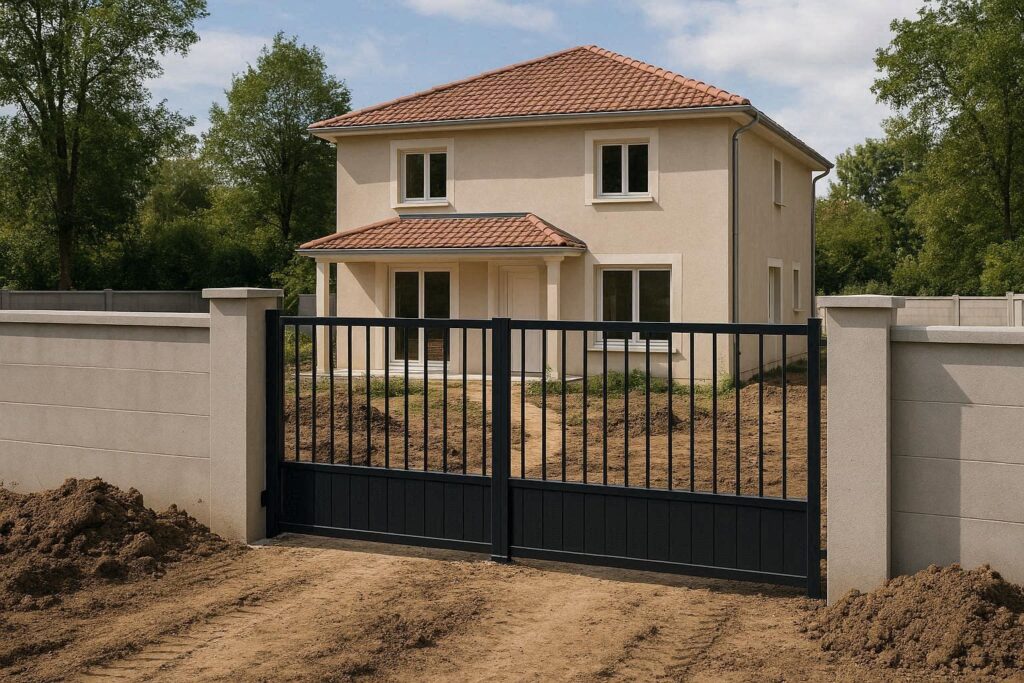
Realizing the dream of a new home—whether it’s a detached house or a terraced villa—brings with it an endless list of decisions. Between choosing flooring and wall colors, there is one aspect that is often underestimated in the early stages but radically transforms the daily experience of “living well”: automation.
Imagine returning home after a long day at work, perhaps under a driving rain, and not having to get out of the car to open the gate. Or waking up to natural light filtering in because the shutters rose silently at the programmed time. This is not a superfluous luxury; it is efficiency, security, and comfort.
In this complete guide, we will explore the ideal path for those who have just purchased a home and wish to make it “smart,” starting from the mechanical foundations. We will analyze what to automate first, how to choose the right motors, and why the professional installer is your best ally.
The Hierarchy of Automation: What to Do First?
When moving into a new property, the temptation is to do everything at once. However, to optimize the budget and construction site work, it is fundamental to follow a logical order based on daily utility and ease of installation.
- The First Line: The Entrance Gate The gate is the calling card of your home and the first security barrier. Automating it must be an absolute priority. A manual gate in a villa is, objectively, an obstacle to the flow of your day.
- The Second Line: The Garage Immediately after the gate, the garage represents the point of direct access to the residence. Automating the up-and-over or sectional door means not only security but also the convenience of entering without leaving your vehicle.
- The Third Line: Climate Comfort (Shutters and Awnings) Once the access points are secured, move to the building envelope. Motorizing shutters and sun awnings allows you to manage the home’s temperature, saving on heating and cooling costs.
- The Fourth Line: Light Points and Ventilation (Windows and Skylights) Finally, the automation of high windows, domes, or skylights guarantees optimal air exchange even in spots that are difficult to reach manually.
Automating the Gate: A Guide to Selection
Not all gates are the same, and consequently, not all motors are suitable. The choice depends on space, weight, and frequency of use.
Swing Gates
- External Actuators: Visible mechanical arms, robust and easy to maintain. They are ideal if you have no aesthetic concerns and seek maximum reliability.
- Underground Motors: The solution for those seeking total invisibility. The motor is hidden in a foundation box underground, preserving the design of the gate.
Sliding Gates
Ideal for those with little depth but plenty of lateral space. Here, the fundamental parameter is weight. A 300 kg gate requires different power than a 2000 kg industrial one. The installer will verify the fluidity of the ground guide before mounting the pinion.
The Garage: Security and Quietness
Garage automation must not only be powerful but also smart. Modern actuators are equipped with obstacle detection systems and manual emergency release in case of a blackout. A correctly automated garage should allow for an airtight closure and a fluid start (soft start/stop) to avoid stressing the door structure (whether sectional or up-and-over).
Shutters and Awnings: Beyond Convenience
Many think that motorizing shutters only serves to avoid the effort of pulling the strap. In reality, the benefits are much deeper:
- Protection of Fixtures: The constant and controlled movement of the motor avoids jerks that can damage the slats.
- Presence Simulation: With a timer, shutters can move even when you are on vacation, discouraging intruders.
- Energy Efficiency: Light sensors can lower awnings automatically when the sun is strong, keeping the house cool and reducing AC usage.
Windows, Skylights, and Domes: “Invisible” Automation
In modern homes, especially in attics or lofts, there are openings positioned high up to favor the “stack effect” (hot air rises and must exit). Automating these openings with chain or stem actuators transforms air management. Some actuators are so discreet they integrate perfectly into the window profile, making automation almost invisible but extremely effective.
The Importance of the Professional Installer
An automatic gate is considered a “machine.” If it is not installed according to current standards, with the right photocells, sensitive edges, and safety distances, it can become dangerous. A certified installer issues the Declaration of Conformity, which is mandatory by law.
- Calculation of Forces: A professional measures the impact force of the gate. If the motor pushes too hard, it risks crushing; if it pushes too little, the gate won’t move correctly in wind or frost.
- Wiring Choice: Bringing electricity outdoors requires suitable cables, differential protection, and trenches up to code. A wiring error can burn the electronic board during the first storm.
- Peer Tip: Don’t skimp on the installer. A good motor installed poorly will last half as long and give you double the problems. A VDS professional will know exactly which model supports the load of your structure.
VDS Automazioni Solutions: Made in Italy for Your Home
VDS Automazioni produces solutions in Italy that combine mechanical robustness and cutting-edge technology. Here are specific tips for your new home, divided by category:
For Your Gates
- Swing Gates (External):
- EGO: The electromechanical actuator par excellence. Elegant, compact, and perfect for leaves up to 2.5 – 3 meters. It is the ideal choice for the modern villa seeking discretion and reliability.
- PM1: If you have large leaves or seek superior robustness, the PM1 is the flagship of the range, capable of handling prolonged stress without batting an eye.
- Swing Gates (Invisible):
- UNDER-V: If you don’t want to see mechanical arms on your beautiful wrought iron or designer gate, underground automation is a must. Powerful and protected against corrosion.
- Sliding Gates:
- SIMPLY: Perfect for light residential sliding gates. It is fast, quiet, and very easy to program.
- AG FUTURE: The definitive solution for heavier gates. Please note: Here, installer consultation is vital, as the weight and friction of the gate determine the specific version to install.
For Your Garage
- UTILE: The name says it all (“Useful”). It is a drive for sectional and up-and-over doors that makes access to the garage fluid and secure. It features an integrated courtesy light that illuminates the garage as you enter with the car.
For Windows
- MICRO EVO1: Elegance enclosed in a chain actuator. Small, quiet, and perfect for top-hung or bottom-hung (vasistas) windows in your living area or bathrooms.
For Shutters and Awnings
- KENDA: Powerful and versatile tubular motor, ideal for heavy shutters or for those seeking fast movement.
- KINDI: The optimal solution for sun awnings, guaranteeing perfect fabric tension and resistance to atmospheric agents.
Conclusion
Entering a new home is the start of an important chapter. Automating it doesn’t just mean adding motors; it means investing in your time and quality of life. Choosing VDS Automazioni products means relying on the experience of those who build every component with artisanal care and industrial precision.
The next step? Don’t try to do everything yourself. Contact a professional installer, a VDS partner: they will be able to perform a survey, evaluate the weights and resistance of your fixtures, and recommend the perfect configuration to transform your new home into a true oasis of automated comfort.