
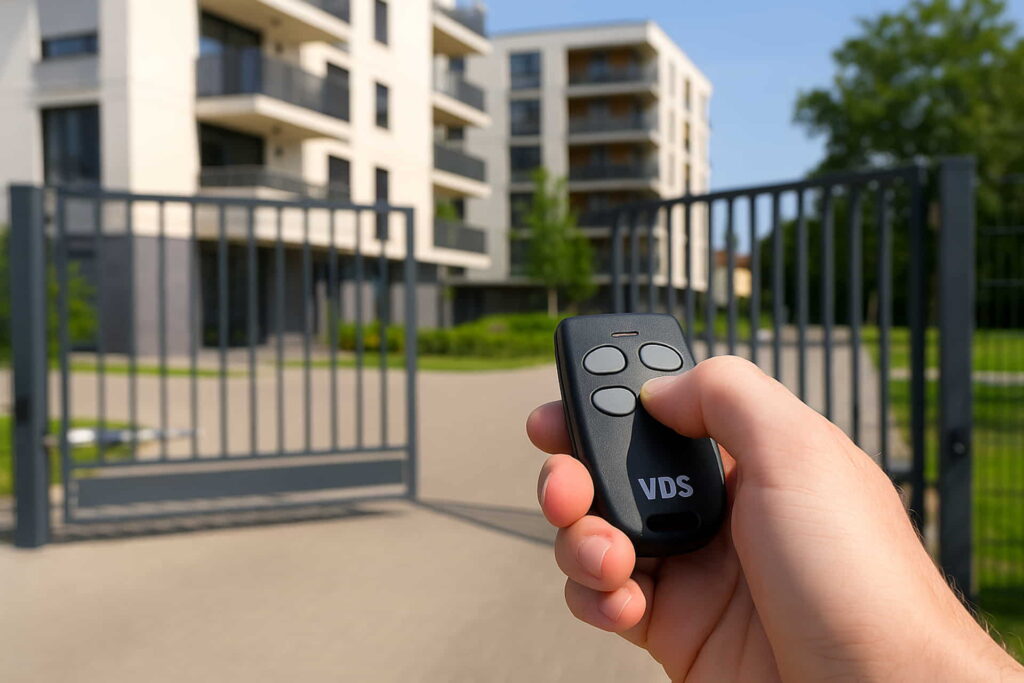
Multi-frequency remote controls for gates solve compatibility problems between different devices. Discover when it’s worth using them.
When dealing with an existing gate automation system—perhaps built with components from various brands—clients often lose their old remote or need a duplicate. That’s when problems arise: frequency mismatches, unrecognized codes, incompatible receivers. The solution? Multi-frequency remote controls for gates.
In this article, we’ll explore what they are, how they work, and when to recommend them. Simplify your on-site work and offer clients a versatile, reliable option for gate automation compatibility.
What Are Multi-Frequency Remote Controls?
Multi-frequency remote controls are transmitters that operate on multiple frequency bands (e.g., 433 MHz, 868 MHz) and support various encoding protocols: rolling code, fixed code, proprietary codes, and even hopping code in some cases.
The key benefit? No need to hunt for an exact match to the original model. One universal gate remote can manage multiple gates or receivers from different brands, installed at different times.
How Do Next-Generation Multi-Frequency Remotes Work?
Advanced models offer:
- Automatic scanning and learning of the old remote’s frequency and code.
- Storage of multiple channels, each linked to a different frequency or device.
- Simplified interface for direct remote-to-remote duplication, without connecting to the control unit.
In practice, duplicate old-generation remotes from various brands in seconds—with no technical documentation required.
When Should You Use Multi-Frequency Gate Remotes?
These devices shine in scenarios like:
- Clients with multiple automated gates using different systems (condos, businesses, multi-parking lots).
- Duplicating out-of-production remotes.
- Lost originals where brand and model are unknown.
- Avoiding full receiver replacements just for compatibility.
For installers, they’re a time-saver. For clients, an immediate, cost-effective alternative to overhauling the entire system.
What to Always Check Before Installation
Even versatile multi-frequency remotes require these best practices:
- Verify the target system’s encoding type (some proprietary rolling codes aren’t compatible).
- Confirm if the receiver supports remote programming or needs physical access to the control unit.
- Register the new transmitter using the specified method (e.g., “PROG” button, display combinations).
Universal vs. Dedicated Remotes?
For legacy automation where parts and support vanish, VDS stands out—manufacturing in Italy with specialized technicians, we handle most assistance requests, even for unique cases.
Main multi-frequency types:
- Universal remotes: Broad compatibility across brands; ideal for general coverage in mixed environments.
- Programmable dedicated models: Narrower range but more stable and secure long-term.
Opt for universals in multi-brand setups; choose specifics for standardized systems.
Why Choose VDS Multi-Frequency Remotes: Installer Benefits
✅ Less time searching for compatible parts
✅ One solution for multiple systems
✅ Reduced inventory needs
✅ Higher client satisfaction