



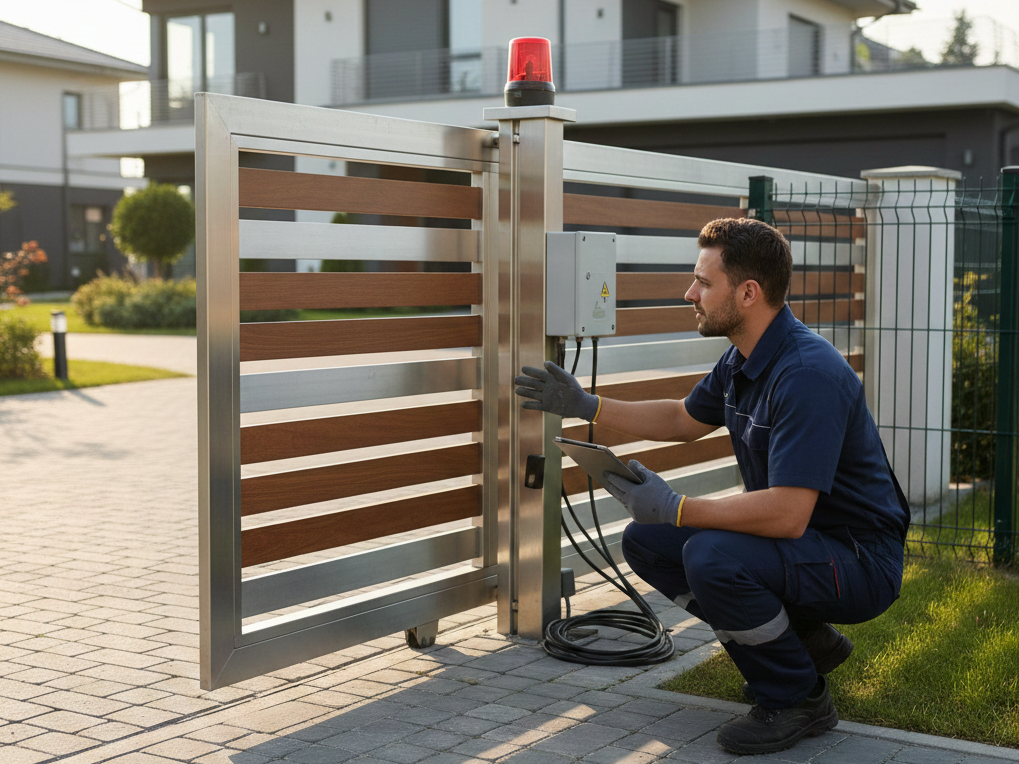
An automatic gate is much more than a simple closure: it’s a complex system where precision mechanics and electronics work in synergy to ensure safety and comfort. However, being exposed 24/7 to weather conditions and constant stress, the automation requires specific care to avoid sudden breakdowns.
In this guide, we’ll explore how to diagnose the most common malfunctions and how to intervene, distinguishing between simple tips for owners and technical adjustments for professional installers.
Initial Diagnostics: Mechanical or Electronic Issue?
Before disassembling any component, it’s essential to identify the nature of the fault. A wrong diagnosis can lead to unnecessary expenses or potentially damaging interventions to the control unit.
The “Manual Release” Test
The litmus test is to unlock the motor with the customized release key provided by VDS Automation and move the gate leaf by hand.
- If the leaf moves smoothly: The problem is almost certainly electronic (control unit, photocells, limit switches, or remotes).
- If the leaf is heavy, noisy, or sticks: The fault is mechanical. It could be rusty hinges, tracks clogged with debris, or worn pinion and rack.
Common Symptoms and Quick Solutions
Here’s a summary table to guide you through the signals your gate sends and the actions to take.
|
Common Symptom |
Possible Cause |
Recommended Solution |
|
Gate opens but won’t close |
Dirty, misaligned, or obstructed photocells |
Clean lenses and check transmitter/receiver alignment |
|
Reduced remote control range |
Dead batteries or radio interference in the area |
Replace batteries or install external antenna |
|
Slow or labored movement in winter |
Old grease gelling or dead backup batteries |
Use spray lubricants and check accumulator status (for 24V systems) |
|
Metallic noise or vibrations |
Dirty/worn pinion or rack; unlubricated hinges |
Thorough cleaning and lubrication with non-sticky specific products |
|
Gate reverses suddenly |
Overly sensitive obstacle detection or debris on tracks |
Remove obstacles or recalibrate “AMP” trimmer (for technicians) |
|
Gate receives no commands |
Power outage or blown fuse on control unit |
Check main switch and fuses F1/F2 |
Best Practices for Mechanical Maintenance
VDS Automation’s build quality relies on solid steel and cast iron gears machined from solid stock—materials offering superior durability but requiring proper protection.
Lubrication: Less is More (If Done Right)
A common mistake is using heavy paste greases on racks and pinions. In dusty environments or with gravel, this grease attracts debris, creating an “abrasive paste” that wears gear teeth quickly.
- Expert Tip: Use lithium or silicone spray lubricants. They protect against oxidation without attracting dirt.
- Guide Cleaning: For sliding gates (like the Simply or Carrera lines), cleaning the ground track is crucial. Stones, leaves, or soil buildup can trigger safety amperometric sensors, causing stops that mimic electronic faults but are just physical obstructions.
Technical Corner: Programming and Setup for Installers
For professionals, troubleshooting often involves proper configuration of control units (like the Euro230M2 series or Q100 Inverter).
Safety Management and Operating Logics
Modern VDS control units allow detailed customization via DIP-switches and trimmers:
- AMP Trimmer (Sensitivity): Adjusts the force needed to trigger reversal on obstacles. Too sensitive on heavy gates can cause untimely stops.
- RALL Trimmer (Slowdown): Essential to prevent the leaf from slamming into mechanical stops, preserving motor life and gate structure.
- Condominium Function: Correct DIP-switch settings (e.g., DIP 2 ON in many models) prevent sudden stops from opening pulses during operation, ensuring smooth vehicle flow.
- Water Hammer Pulse: Crucial for gates with electric locks; the control unit gives a brief closing pulse before opening to release the latch.
When to Call a Professional?
While cleaning and battery checks are tasks any user can do, UNI EN 12453 standards require periodic maintenance and force tests to be performed by qualified personnel at least once a year.
A certified technician won’t just make the gate move—they’ll conduct instrumental tests with force gauges to ensure the automation is safe for people and compliant with the Machinery Directive.
Conclusions
Keeping an automatic gate running efficiently means protecting your investment and the safety of your family or business. With VDS Automation’s Made in Italy components and a proper diagnostic routine, your system can deliver thousands of trouble-free cycles.