



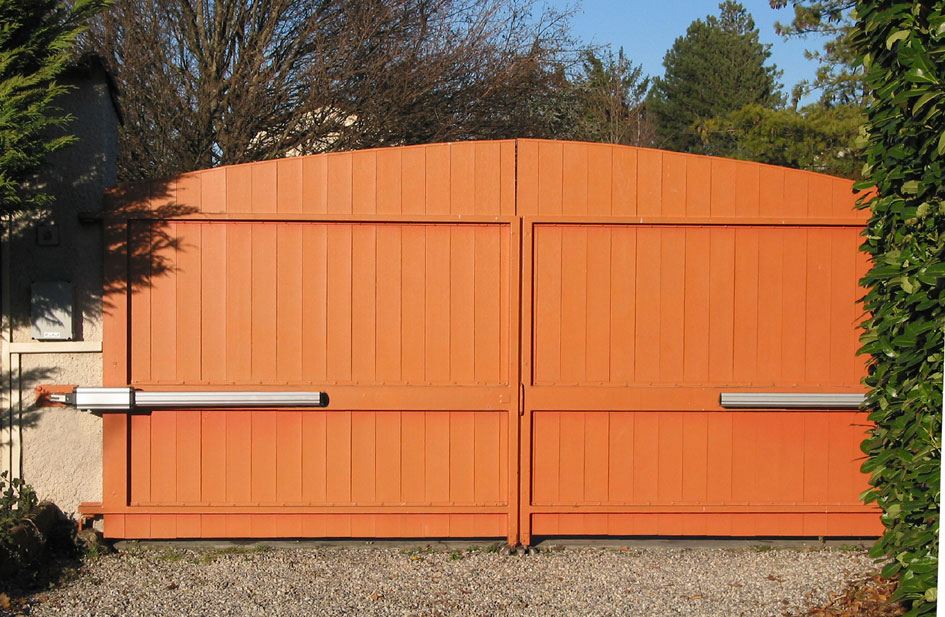
The comfort of arriving home during a downpour and watching your gate glide open with a simple click is a luxury no one wants to give up. Yet, we often forget that behind that smooth, silent movement lies a powerhouse of mechanics and electronics working under sometimes extreme environmental conditions. Scorching sun, freezing temperatures, humidity, and dust are the daily enemies of any automation system.
Ensuring a long life for a gate motor isn’t just a matter of convenience; it’s primarily about safety and cost savings. In this article, we will explore how to care for your system, distinguishing between what you can do yourself and what must be left to expert hands.
Daily Supervision: The Owner’s Eye
The first form of maintenance is observation. You don’t need to be a technician to realize something is wrong. An attentive user can prevent costly breakdowns simply by paying attention to the signals the motor sends.
Visual and Auditory Checks
Once a week, take thirty seconds to listen to your gate while it moves.
- Unusual Noises: Do you hear metallic grinding or clicking? There might be an obstruction on the track or a bearing starting to fail.
- Fluidity of Movement: Does the gate move at a constant speed or slow down at certain points? Jerky movement is a symptom of mechanical friction that overloads the motor.
- Alignment: For sliding gates, check that the leaf is perfectly level and does not wobble during its run.
Cleaning External Components
It sounds simple, but cleaning is the most cost-effective form of maintenance.
- Photocells: These are the “eyes” of the system. If they are covered in dust, mud, or cobwebs, they may not detect obstacles correctly or could prevent the gate from closing. Wiping them with a damp cloth takes seconds but ensures maximum safety.
- The Ground Track (for sliding gates): Stones, leaves, or dirt buildup can cause the gate to jump or strain the motor. Sweeping along the track is essential.
- Maneuvering Area: Ensure that vegetation (tall grass or climbing plants) does not grow into the path of movement or interfere with the safety sensors.
Routine DIY Maintenance: What the User Can Do
Beyond cleaning, there are small technical interventions that a user with basic manual skills can perform independently to keep the system efficient.
Lubrication: The Secret to Silence
Note: Not everything should be lubricated, and not all lubricants are suitable.
- What to lubricate: Hinges of swing gates, wheel bearings of sliding gates, and pivot joints.
- What NOT to lubricate: The rack of sliding gates should never be greased. Grease attracts dust and sand, creating an abrasive paste that destroys the pinion in a very short time.
- Which products to use: Avoid heavy greases that drip. It is better to use dry silicone or PTFE (Teflon) lubricants, which do not attract dirt.
Testing the Emergency Release
At least once every three months, try unlocking the motor with the manual key provided by the manufacturer. It is vital to ensure the release mechanism is not rusted or stuck; in the event of a blackout or electrical failure, you must be able to open the gate manually without effort.
When to Call a Professional: Specialized Maintenance
There are operations involving electrical safety and the logical settings of the motor. These activities must be performed by a qualified installer, both by law (European Standards EN 12453 and EN 12445) and to avoid voiding the warranty.
Circuit and Electronic Board Analysis
A technician will check the status of the control unit. The presence of small insects (like ants) or snails inside electrical boxes can cause devastating short circuits. The professional will clean the board with specific products and check the integrity of the seals.
Force Regulation and Sensitivity
This is the most critical aspect of safety. An automatic gate must never crush a person, animal, or vehicle. The technician uses a tool called a dynamometer to measure whether the impact force falls within legal limits. If the motor pushes too hard, it’s dangerous; if it pushes too little, the gate will stall at the slightest breeze.
Checking Capacitors and Brushes
In 230V motors, the capacitor is a wear-prone component that provides the initial start-up torque. If the gate “struggles” to start, the technician will know how to replace it. In direct current (DC) motors, they will check the brushes (if present) or the efficiency of the encoder.
Maintenance vs. Neglect: What is the Real Lifespan of a Motor?
A common question is: “How long does a gate motor last?” The answer depends almost entirely on the care it receives.
|
Scenario |
Estimated Average Lifespan |
Common Issues |
|
Zero Maintenance |
8 – 10 Years |
Gear failure due to friction, water infiltration, boards fried by insects, seized hinges. |
|
Regular Maintenance |
15 – 25 Years |
Natural wear of minor components (easily replaceable), maintained energy efficiency. |
The Cost of “Apparent” Savings
Skipping maintenance seems like a saving, but it’s an illusion. A neglected motor works under constant strain, consuming more electricity and leading to premature wear of mechanical components like the pinion and rack. Replacing an entire automation kit after 8 years costs significantly more than a biennial check-up by a technician.
The VDS Automazioni Difference: Italian Strength and Reliability
Once the mechanical parts are completed, the motor enters the assembly line. At VDS Automazioni, this is not a cold, impersonal sequence, but a process guided by expert and professional hands.
The Value of the Human Touch
Not all motors are created equal. VDS Automazioni designs and assembles its products entirely in Italy, following quality standards aimed specifically at minimizing the need for corrective interventions.
Premium Quality Materials
The VDS philosophy is based on structural solidity. While many manufacturers rely on plastic components or cheap light alloys, VDS uses:
- Die-cast aluminum for the casings, ensuring resistance to impacts and weather.
- Cast Iron and bronze-alluminum gears, which ensure smooth motion transmission and near-zero wear over time.
- Powder coating resistant to UV rays, keeping the motor’s aesthetics intact for decades.
Autonomy and Simplicity
VDS motors are designed to be “smart.” Thanks to advanced control units, they manage energy autonomy flawlessly, especially in low-voltage (24V) versions that can be integrated with solar panels, making your entrance independent of the power grid.
Minimum Maintenance for Maximum Performance
Thanks to the precision of the assembly, VDS motors require less maintenance. Oil-bath mechanics (found in specific models) or lubricated systems allow the user to live without the anxiety of constant checks. The robustness of our Italian production is designed for those looking for a product that you “install and forget,” while still maintaining those small, good habits of cleaning described earlier.
Conclusion
An automatic gate is an investment in your safety and quality of life. Treating it with care means protecting that investment. With small daily gestures and the support of a professional installer, your automation will stay with you for decades.
If you are looking for a system that combines the power of Italian mechanics with ease of management, VDS Automazioni has the ideal solution for you. Designed to last, built to resist: our motors are the beating heart of thousands of entrances worldwide, always guaranteeing excellence with minimal effort.
Want to learn more about which motor is best for your gate? Consult our catalog or contact an authorized VDS dealer to discover the quality of automation without compromise.