



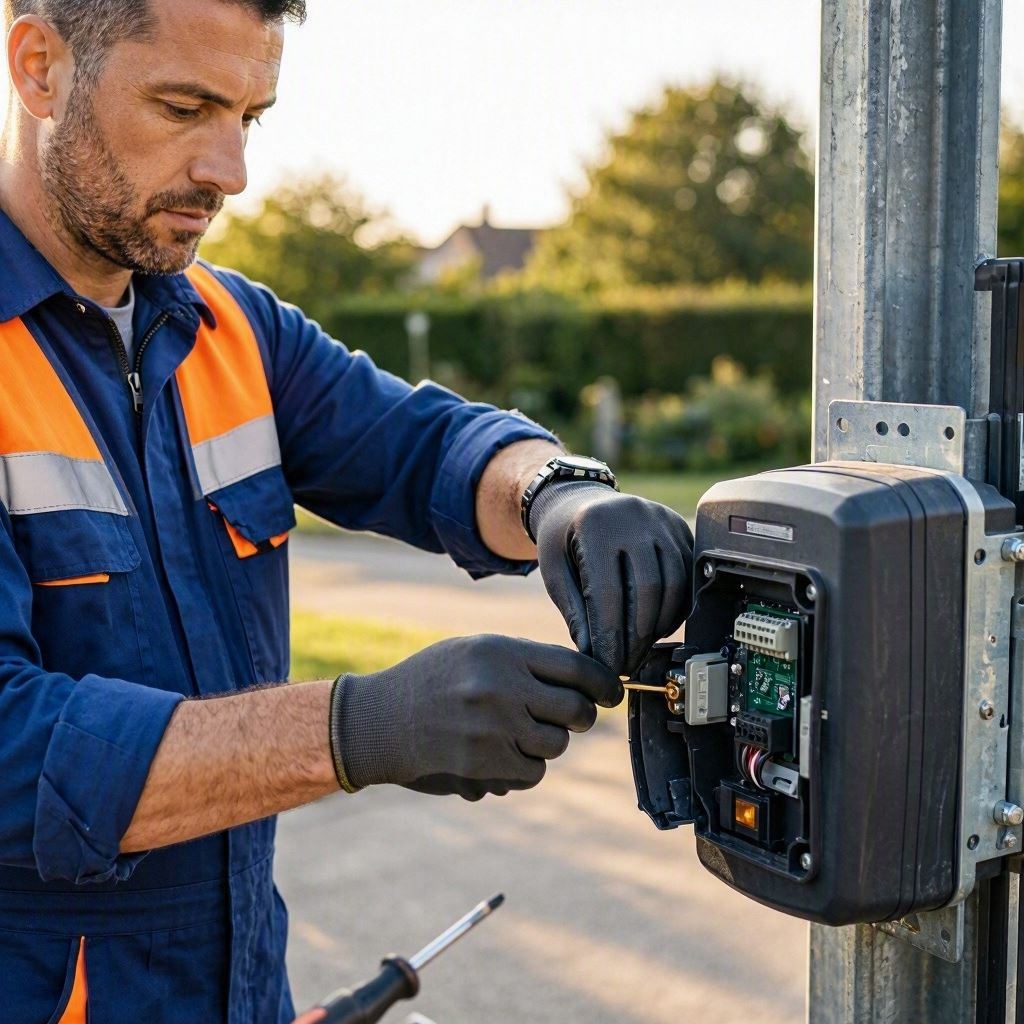
The transition from summer to autumn marks a crucial period for the management and preservation of technological systems installed in residential, condominium, commercial, and public buildings. As occupants return from vacation and resume their daily routines, automation systems—ranging from classic swing and sliding gate motors to more complex devices such as road barriers, automatic bollards, garage doors, and tubular motors for rolling shutters, awnings, skylights, domes, and windows—must face the operational toll of the previous months.
Summer subjects mechanical and electronic equipment to severe environmental stress: high temperatures, direct solar radiation, marked thermal excursions, fine dust, salt spray in coastal areas, and sudden stormy downpours. However, around the methods by which these systems should be checked and maintained at the end of the warm season, many erroneous beliefs, urban legends, and bad habits still persist among non-experts and, at times, even among novice technicians.
Relying on faulty operational myths not only compromises the longevity of the technological investment but also exposes property owners and managers to sudden malfunctions, high repair costs, and potential safety issues regarding automated closures. In this technical insight, analyzed through the lens of engineering and the entirely Italian production of VDS Automazioni, we will examine the main misconceptions related to post-summer maintenance, contrasting them with rigorous technical data, structural analysis, and professional best practices.
-
The Myth of Universal Lubrication: Why Grease and Oil Everywhere Damage Mechanics
The Common Belief
One of the most persistent urban legends upon returning from vacation concerns lubrication. The common belief leads people to think that if a sliding gate, a swing arm, or a guide begins to move with minimal resistance or emits a slight noise after months of disuse or exposure to summer dust, the immediate solution is to grab a can of generic spray oil or common thick grease and spread it abundantly over racks, pinions, ground tracks, and piston rods. The instinctive reasoning suggests that “the more lubricant there is, the lower the friction will be.”
The Technical and Engineering Reality
From a mechanical standpoint, applying unselected grease or oil to the exposed exterior parts of an automation system represents one of the most destructive mistakes one can make. During the summer, wind and vehicular traffic lift tons of dust, ultra-fine sand, and earth particles that settle everywhere.
If a layer of thick grease or non-specific oil is applied to these dirty surfaces, a disastrous chemical-physical reaction is triggered: the lubricant catches and traps the dust, turning into a thick and tenacious abrasive paste. This patina, moved by the opening and closing cycles, acts exactly like microscopic sandpaper on the teeth of steel pinions, racks, and sliding bushings, multiplying wear instead of reducing it.
The precision mechanical components designed in VDS Automazioni’s production departments—such as worm gear reducers and gears made of hardened steel and bronze—require specific lubricants sealed inside airtight casings. External parts exposed to dust, on the contrary, require a thorough cleaning followed optionally by treatments based on dry lubricants (such as PTFE/teflon or silicone spray) that do not attract dirt.
Correct Post-Summer Protocol
- Preliminary Cleaning: Carefully remove sand, dry leaves, and debris accumulated in the ground tracks of sliding gates or sliding wells.
- Degreasing: Eliminate any residues of old greases contaminated by dust using suitable solvents.
- Dry Lubrication: Exclusively apply suitable products recommended by the manufacturer, avoiding heavy oils on parts exposed to the open air.
-
The Myth of Eternal Waterproofing: Control Units and Photocells Do Not Fear Autumn Humidity
The Common Belief
“The gate withstood all the storms of July and August without ever stopping; consequently, the control unit housing and photocells are perfectly watertight and do not require any inspection before the arrival of autumn rains.” This false sense of security leads people to completely overlook the inspection of external electronic compartments.
The Technical and Engineering Reality
The intense summer sun beats down incessantly for months on the plastic parts and watertight housings (IP54 or higher) that protect the electronics of gates, barriers, and access control systems. Ultraviolet (UV) radiation and high surface temperatures (which inside a box exposed to the sun can easily exceed 50-60°C) cause the thermal degradation of plastic polymers and rubber or silicone gaskets.
Gaskets progressively lose elasticity, harden, suffer micro-cracking, or shrink, losing their perimeter adhesion. When the first heavy autumn storms occur, rainwater does not penetrate as a continuous flow, but exploits the capillarity of the micro-cracks in the gaskets damaged by the summer sun.
Inside the watertight cabinet, the dew point phenomenon also occurs: the thermal shift between daytime hours and the cold night generates internal condensation. The condensation water, combined with any penetrated dust, creates saline and conductive deposits on the control unit’s printed circuit boards, causing short circuits, false commands, anomalies in safety devices, or the nuisance tripping of residual-current devices (safety breakers).
How to Prevent Electronic Failure
- Visual and Tactile Inspection of Gaskets: Verify that the O-rings and perimeter gaskets of control units and photocells are soft and intact.
- Cable Gland Check: Ensure that the lower cable glands are tightly secured around the power and signal cables, preventing infiltration from below.
- Board Inspection: Open the housings in the absence of power to check for traces of moisture or oxidation on the terminals and microchips.
-
The Myth of the “Powerful Motor Overcoming Friction”: Impact Force and Regulatory Risks
The Common Belief
Upon returning from vacation, it often happens that a swing gate moves slowly or irregularly. The common reaction to this symptom is to intervene on the electronic control unit to maximize power, torque, or motor thrust parameters, or to replace the actuator with an oversized model, thinking that greater force will solve any mechanical resistance.
The Technical and Engineering Reality
This behavior is not only technically incorrect, but it violates the fundamental safety principles imposed by CE marking and European technical standards (Standards EN 12453 and EN 12445). A gate that offers mechanical resistance after summer usually suffers from structural problems related to thermal expansion: hinges and pivots misaligned by heat, exhausted lubrication in rotation pivot points, seized bushings, or wheels deformed by prolonged weight under solar radiation.
Forcing the electronic control unit to increase motor thrust without resolving mechanical friction subjects the reducer, lever arms, and wall supports to extremely high stresses, with the concrete risk of shearing the anchoring plugs in the pillar or stripping internal gears. Even more serious is the safety aspect: if impact force control (encoder or mechanical clutches) is eliminated or poorly calibrated, the automation loses the ability to reverse direction upon contact with an obstacle, turning into a potential hazard for property and people.
Correct Maintenance Practice
- Manual Release Test: Unlock the automation and check the movement of the gate leaf by hand. It must slide or rotate smoothly without abnormal effort.
- Mechanical Adjustment: Before touching the electronics, adjust the hinges, lubricate the pivot points, and verify geometric alignment.
- Instrumental Force Verification: Rely on qualified installers capable of measuring impact force with a certified dynamometer, ensuring the legal compliance of the system.
-
-
The Myth of Motors for Rolling Shutters, Awnings, and Skylights: Devices Immune to Seasonal Stress
The Common Belief
In the smart home and building envelope automation sector, tubular motors inserted inside the rollers of rolling shutters, awnings, bioclimatic pergolas, skylights, and dome windows are often considered passive components that do not require periodic maintenance, as they are protected inside casings or aluminum profiles.
The Technical and Engineering Reality
Awnings and pergolas, in particular, operate under extreme conditions during the summer season: strong gusts of wind, dust, salt spray, and continuous opening and closing cycles triggered by climatic sensors or users. Thermal expansions of technical fabrics and aluminum rollers minutely alter the mechanical or electronic limit switches of the tubular gearmotor.
If the limit switch is not precisely calibrated, the awning risks forcing against the metal structure of the casing during closure, or the fabric can roll up unevenly, generating anomalous folds and tearing the fabric. Similarly, motorized rolling shutters accumulate dirt and fine dust in their summer vertical guides; the arrival of early autumn winds and rains, combined with dirty guides, generates lateral friction that stresses the tubular motor, leading to thermal overload protection tripping and temporary device blockage.
Recommended Interventions for Windows and Sunshading Systems
- Limit Switch Calibration: Verify that the upper and lower stopping points of rolling shutters and awnings correspond exactly to the expected stop position, without excessive mechanical tension.
- Cleaning Sliding Guides: Remove dust and debris from the side guides of rolling shutters using clean cloths.
- Climatic Sensor Check: Test the correct operation of anemometers and sun/wind sensors before the arrival of more intense autumn storms.
-
-
Road Barriers and Automatic Bollards: Managing High Traffic Flows and Drainage
The Common Belief
In condominium entrances, commercial parking lots, and public access areas with high traffic flow, road barriers and hydraulic retractable bollards are perceived as massive industrial devices capable of operating 24 hours a day without interruption or scheduled maintenance needs.
The Technical and Engineering Reality
Barriers and bollards are the automation systems subjected to the highest number of daily operating cycles. During the summer period, tourist or commercial traffic significantly increases mechanical and thermal stresses. Hydraulic pump units and barrier control units operate at high temperatures, which reduce the viscosity and lubricating properties of the internal hydraulic oil.
If the oil level has dropped due to micro-leaks or if the fluid has lost its original chemical characteristics, the system loses pressure, slowing down the barrier arm or preventing the retractable bollard from rising correctly. Furthermore, the foundation pits of bollards represent the natural collection point for leaves, sand, soil, and rainwater. If the pit’s drainage and discharge systems are clogged, the first autumn downpours will completely submerge the bollard body, damaging the electromagnetic coils and low-voltage control electronics.
Check-list for Barriers and Bollards
- Cleaning Drainage Pits: Periodically inspect the foundation pits of bollards and clear discharge conduits to prevent water stagnation.
- Hydraulic Oil Check: Verify the level and clarity of the hydraulic fluid inside the barrier and bollard control units, topping up or replacing it with specific high-thermal-performance oils.
- Checking Magnetic Loops and Safety Devices: Check the correct operation of buried loops and transit photocells to prevent accidental impacts against vehicles.
A battery left inactive for months, subjected to the scorching temperatures of July and August, may appear charged but be incapable of delivering the high surge current required by the motor at startup. Consequently, upon the first power outage caused by autumn storms, the gate will remain locked, defeating the emergency function for which it was purchased.
Guidelines for Battery Management
- Seasonal Autonomy Test: Disconnect the 230V mains power supply from the electrical panel and test the system by performing at least 3 or 4 complete opening and closing cycles on battery power.
- Preventive Replacement: If during the test the motor noticeably slows down or the control unit signals a low battery, immediately proceed to replace the accumulator with an original spare part conforming to the manufacturer’s technical specifications.
-
The Strategic Value of Scheduled Maintenance with VDS Automazioni
Overcoming urban legends and adopting a culture based on preventive maintenance and specialized technical control does not only mean avoiding sudden breakdowns, but constitutes a true strategy for safeguarding real estate value. Products signed by VDS Automazioni originate from an entirely Italian production chain, based on the selection of top-quality raw materials, precision mechanical machining (such as fully machined gears), and severe stress testing conducted within corporate laboratories.
However, the intrinsic manufacturing excellence of VDS devices requires proper pairing with periodic interventions by professional installers. Relying on the network of qualified VDS technicians for a post-summer check-up brings three fundamental advantages:
- Maximization of the operational lifecycle, preventing premature wear of the most stressed mechanical and electronic components.
- Maintenance of ongoing regulatory compliance, preserving unaltered the anti-accident safety requirements prescribed by European directives for gates, garage doors, and barriers.
- Optimization of management costs, avoiding extraordinary emergency interventions in the middle of winter when weather conditions make repairs more complex and costly.
Quick Reference Table for Post-Summer Maintenance
System Type
Common False Myth
Correct Post-Summer Maintenance Action
Swing / Sliding Gates
The more grease applied to guides, the better.
Clean racks and guides from dust and sand; use exclusively dry lubricants (teflon/silicone).
Control Units / Electronics
Watertight boxes protect electronics forever.
Verify perimeter gasket integrity and cable gland tightness against condensation.
Photocells and Safety
If they worked in summer, they will always work.
Clean optics from cobwebs and dust; test immediate motor reversal upon encountering an obstacle.
Emergency Backup Batteries
Accumulators do not suffer wear over time.
Run an autonomy test by disconnecting 230V mains power to verify energy reserve cycles.
Shutters and Awnings
Tubular motors are unaffected by climate stress.
Check limit switch precision and clean side guides from summer debris and residues.
Road Barriers and Bollards
They can operate continuously without servicing.
Check hydraulic oil level and clear drainage pits of accumulated leaves and debris.
Conclusion
Facing the seasonal change and the arrival of autumn with correct technical awareness transforms the maintenance of automation systems from a simple obligation into a decisive factor for efficiency, comfort, and safety. Debunking erroneous beliefs allows you to preserve intact the characteristics of excellence and reliability guaranteed by Italian production at VDS Automazioni. A regularly checked system maintained according to appropriate engineering criteria and managed by authorized professionals represents the fundamental guarantee for always smooth, protected, and secure access under any weather condition.
The VDS Approach: Beyond Common Myths, Straight to Excellence in Mechanics
Dismantling these five false myths leads us to one inescapable conclusion: an automation’s reliability isn’t born from chance or brute force, but from a rigorous production supply chain designed to last.
In our Italian manufacturing plant, every phase—from the fluid-dynamic and mechanical design of gearboxes to strict electronic and thermal testing—is executed without compromise. Choosing components made from noble metal alloys, correctly sizing duty cycles according to actual site requirements, and relying on intelligent control units means eliminating unexpected service calls, protecting the professional installer’s work, and offering end users complete daily peace of mind.
The next time you face an imposing gate or a complex site challenge, remember not to judge by appearances or old village legends: look at the mechanics, analyze the technical data, and choose intelligent precision.