



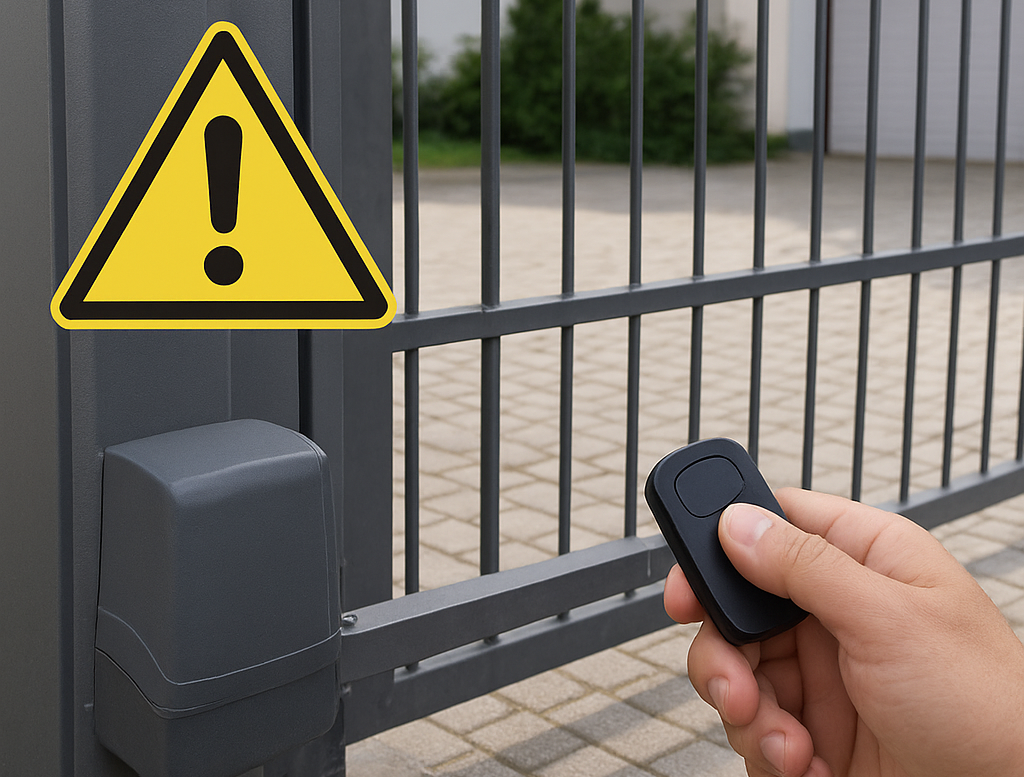
Automatic gates are a practical and modern solution for ensuring security and convenience, but like all mechanical and electrical systems, they can develop issues that compromise their operation. This guide is designed for both installers and gate owners, providing a comprehensive overview of the most common problems, essential preliminary checks, and best practices to keep the system always operational and safe.[
Swing Gates: Essential Preliminary Checks
When a swing gate isn’t functioning properly, the first step is to rule out the simplest issues through a series of systematic checks. This procedure, if done correctly, allows you to identify the fault in just a few minutes and intervene effectively.
No Electrical Power
The most common and easily fixable cause is a power interruption. Before diving into complex diagnostics, check that the gate is plugged into the power outlet and that the main switch is on. Also inspect the fuse box: if a fuse is blown, replace it with one of the same type and amperage. Remember, it’s always best to avoid using higher-amperage fuses, as they could cause greater damage to the system. If fuses keep blowing, the issue is likely internal and requires a qualified technician.
Remote Control Malfunction
Often, the fault is simply a defective remote control. First, check the batteries: if the LED doesn’t light up when you press a button, they’re probably dead. Replace them with new ones of the same type. If the remote works intermittently or no longer communicates with the control unit, a receiver reset may be needed. Try unplugging the power from the control panel for a few minutes, then reconnect it. If the problem persists, the remote may be damaged and need replacement.
Blocked or Jammed Motor
A blocked motor is recognizable because the gate doesn’t move at all, and you may hear rattling noises or squeaks. Common causes include dirt buildup, mechanism wear, or accidental activation of the safety lock. If the gate has a manual lock, deactivate it by inserting the key provided at installation and turning it counterclockwise. If the issue continues, visually inspect the opening and closing mechanisms for obstacles or severe wear signs. In this case, lubrication or mechanical maintenance may be necessary.
Worn Tracks and Guides
Over time, swing gate tracks and guides can wear out, causing difficulties in closing and opening. If the gate drops slowly on one side or gets stuck during movement, it could be an alignment problem. Even a few millimeters of misalignment can cause friction and malfunction. In these cases, adjusting the hinge alignment is often needed, or in severe instances, replacing worn hinges.
Sliding Gates: Essential Preliminary Checks
Sliding gates have different characteristics from swing gates and require specific checks. Their complexity mainly lies in detection systems and linear movement mechanisms.
Misaligned or Dirty Photocells
Photocells are the primary safety system for sliding gates, and their malfunction is one of the most common causes of unexpected stops. If the gate stops without apparent reason, first check the photocells’ status. Gently clean lenses and surfaces with a soft cloth and non-abrasive cleaner: dust, mud, cobwebs, and dirt can block the infrared beam, causing false detections.
Next, verify alignment between the transmitter and receiver. Even a minimal shift can interrupt the beam and trigger the safety stop. Use a level or precision tools to ensure components are perfectly aligned. If photocells are physically damaged, they need replacement.
Tripped Limit Switch
The limit switch is a mechanical device that limits gate movement, preventing it from going beyond full open or closed positions. If tripped accidentally, the gate may not move at all. Visually check the limit switch and, if needed, adjust its position per the installed motor’s instructions. In some cases, simply repositioning it suffices without replacement.
Excessive Track Friction
If the gate moves slowly or with difficulty, excessive dirt and debris buildup in the sliding tracks may be the culprit. Thoroughly clean the tracks, removing soil, leaves, and other obstacles. Then apply appropriate lubricant to the system: the rack and pinion must slide smoothly. Be cautious: choose lubricant based on the surrounding environment. In gravelly areas, for example, a slinger might attract too much dust and damage the pinion.
Activated Obstruction Sensor
Many sliding gates have obstruction sensors that prevent movement if an obstacle is detected. If the gate remains blocked with no visible obstacles, the sensor may be faulty or dirty. Clean the sensor and check its connections. If the issue persists, recalibration or replacement may be required.
Troubleshooting: Practical Guide for Installers
After preliminary checks, if the problem continues, proceed to deeper resolution. This phase requires a systematic approach.
Electrical Issue Diagnosis
If the gate lacks power, first inspect the control panel. Check if the control unit shows error codes on the display. Examine cable connections for oxidation, looseness, or damage. Loose cables are a common malfunction cause and often fixed quickly by tightening connectors. If the control unit still fails, it may have been affected by lightning or voltage surges, losing programming. Circuit mapping is then necessary.
Mechanism Cleaning and Lubrication
Once electrical issues are ruled out, focus on mechanical parts. Thoroughly clean the rack, pinion, hinges, and all moving components. Dust and dirt buildup frequently causes friction and premature wear. After cleaning, apply high-quality multi-purpose lubricant. For hinges and pivots, spray grease works well as it doesn’t attract dirt like traditional greases.
For sliding gates, ensure the rack, pinion, and guide wheels are always well-lubricated. In very dirty or gravelly environments, more frequent maintenance is essential.
Force Calibration Check
Motor force calibration is crucial for safety. Motors with inverters and 24V encoders operate automatically: they detect obstacles and reverse accordingly. For 230V motors without inverters, manual calibration is needed, carefully adjusting the electronic clutch to ensure the gate doesn’t close on obstacles. Incorrect calibration poses safety risks.
Preventive Maintenance: The Key to Longevity
Regular preventive maintenance is the most effective way to avoid problems and extend gate lifespan. Per Italian regulations, annual maintenance by a qualified technician is required, with logging in the maintenance booklet and compliance certificate issuance.
Recommended Regular Checks
Perform a visual inspection at least every six months, checking hinge, pivot, bracket, and piston integrity. Regularly clean photocells and safety edges with a soft cloth. Listen to the gate: strange or unusual noises signal it’s time for a technician.
Check electrical connections, cables, and fuses. If you notice abnormal vibrations or component shifts—especially in high-traffic or windy areas—adjust alignments.
Best Practices for Proper Installation
Correct installation is the foundation of a reliable, long-lasting system. These tips should be followed by every responsible installer.
Precise Alignment
Alignment is critical, especially for swing gates. Motors must be positioned at the same height on both pillars. Even a few millimeters offset can cause movement issues over time. Use levels and precision tools for perfect alignment during installation.
Photocells Positioning
Install photocells in strategic spots for effective obstacle detection. For sliding gates, at least two pairs: one inside the gate opening and one outside to monitor the opening area. Ensure they’re shielded from visible obstacles and direct intense sunlight, which could cause malfunctions.
Appropriate Lubricant Selection
Lubricant choice depends on the environment. In gravelly zones, avoid creamy greases that attract dust: opt for spray lubricants that protect without buildup. Always consult manufacturer guidelines for recommended oil or grease types.
Documentation and Logging
Provide the customer with the user and maintenance manual plus the compliance certificate. Explain the mandatory annual maintenance importance and check logging. This ensures customers understand legal responsibilities and regular upkeep needs.
VDS Automazioni Products for Every Need
VDS Automazioni produces a full range of motors for every gate type, designed to the highest quality and safety standards.
For swing gates, VDS offers the PM/PM1 and EGO lines: these linear electromechanical actuators provide reliable, quiet thrust with stainless steel stems, ideal for residential and industrial gates. They’re available in various strokes and load capacities to fit any setup.
For sliding gates, VDS provides an even broader range: SIMPLY and CARRERA for standard 230V-24V applications, ATPLUS for higher-power 230V-380V needs, and AG FUTURE, the most powerful in the line at 230V-380V, perfect for heavy gates with high usage frequency.
All VDS products are designed and made in Italy with top-quality materials, ensuring durability and reliability over time.
Conclusions: Prevention and Professionalism
Automatic gate problems are often preventable through proper installation, regular maintenance, and prompt intervention at the first signs of issues. As industry professionals, your role is crucial not just in fixing faults but especially in educating clients on preventive maintenance and safety importance. A well-installed and regularly maintained gate ensures years of trouble-free operation, boosting customer satisfaction and professional reputation.